When it comes to fitness, we spend countless hours focusing on the muscles we can see in the mirror—biceps, abs, and glutes. Yet, we completely ignore one of the most critical muscle groups in the human body: the pelvic floor.
Enter the Kegel exercise. Named after American gynecologist Dr. Arnold Kegel, who first described them in 1948, these simple, invisible contractions are the secret to improved core stability, better bladder control, and enhanced sexual wellness.
Whether you are recovering from childbirth, looking to improve your athletic performance, or simply wanting to maintain optimal bodily function as you age, this comprehensive guide will teach you exactly how to master Kegel exercises for beginners.
What Are the Pelvic Floor Muscles?
Before you can strengthen a muscle, you need to understand where it is and what it does.
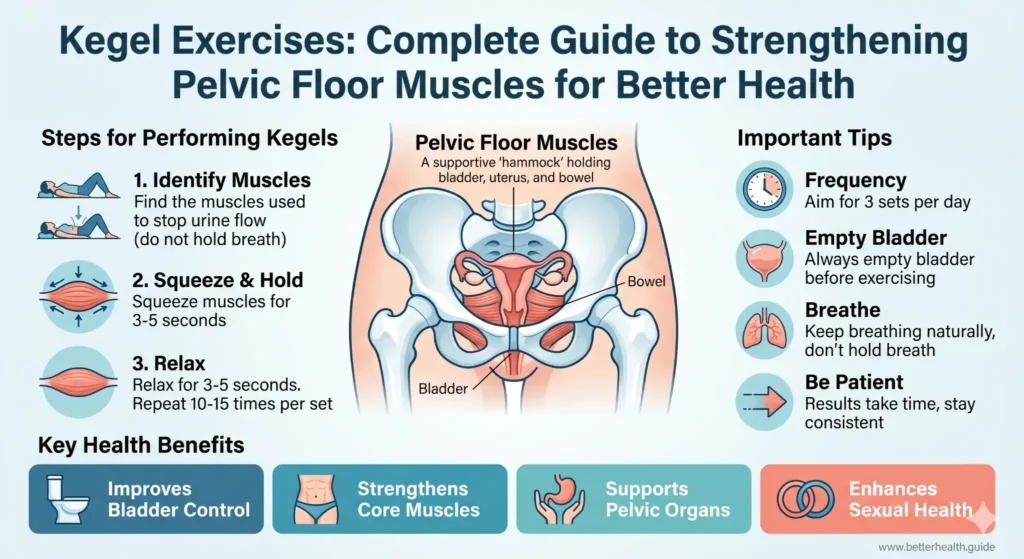
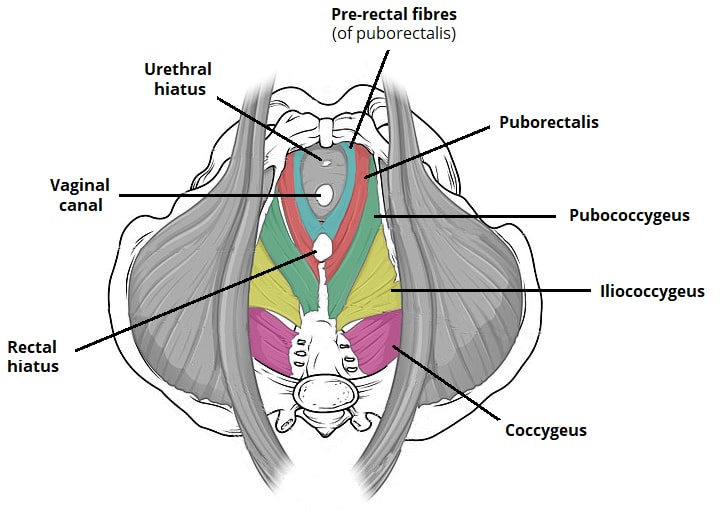
Imagine a muscular sling or hammock stretching from your pubic bone at the front of your pelvis to your tailbone at the back. This hammock is the pelvic floor. These muscles serve several vital functions:
- Support: They hold your pelvic organs (bladder, uterus, intestines, and rectum) in place.
- Control: They wrap around your urethra, vagina, and anus, giving you conscious control over the release of urine and feces.
- Core Stability: They work in tandem with your deep abdominal muscles to stabilize your spine and pelvis.
When this hammock becomes weak—due to aging, pregnancy, childbirth, heavy lifting, or chronic coughing—it sags. This sagging leads to a host of uncomfortable issues, which is exactly why strengthening the pelvic floor is so important.
The Core Benefits of Kegel Exercises
Kegel exercises are completely gender-neutral. While they are often discussed in the context of women’s health (particularly postpartum), they offer profound benefits for everyone.
Benefits for Women
For women, the pelvic floor undergoes significant stress during pregnancy and childbirth. Regular Kegel practice can:
- Prevent Urinary Incontinence: If you leak a few drops of urine when you laugh, sneeze, or jump (known as stress incontinence), Kegels can help tighten the sphincter muscles to prevent leaks.
- Prevent Pelvic Organ Prolapse: By keeping the hammock tight, Kegels help prevent the uterus, bladder, or bowel from dropping down into the vaginal canal.
- Improve Sexual Health: Stronger pelvic floor muscles can increase blood flow to the pelvic region and lead to increased sensitivity and stronger orgasms.
Benefits for Men
Men also have a pelvic floor, and weakening can lead to similar issues. For men, Kegels can:
- Improve Bladder and Bowel Control: Especially beneficial for men who have undergone prostate surgery, which can often cause temporary urinary incontinence.
- Enhance Sexual Performance: Regular pelvic floor exercises can help men manage premature ejaculation and maintain stronger, longer-lasting erections by increasing blood flow to the groin.
How to Find Your Pelvic Floor Muscles (The Crucial First Step)
The single biggest mistake beginners make is exercising the wrong muscles. Because you can’t see the pelvic floor, it is incredibly easy to accidentally flex your abs, squeeze your thighs, or clench your buttocks instead.
Here are the two best methods to locate the correct muscles:
Method 1: The “Stop the Flow” Technique
The easiest way to identify your pelvic floor is while you are using the restroom. Mid-stream, attempt to stop or slow the flow of urine. The muscles you use to do this are your pelvic floor muscles.
Important Safety Warning: Do not use this method regularly. Stopping your urine stream frequently can lead to incomplete bladder emptying, which increases your risk of urinary tract infections (UTIs). Only use this trick once or twice just to identify the feeling.
Method 2: The Visualization Technique
If you prefer not to use the restroom method, try visualization.
- For Women: Imagine you are sitting on a marble and you want to use your vaginal muscles to pick up the marble and lift it inside you.
- For Men: Imagine you are trying to pull your anatomical structures upward and inward toward your stomach, or imagine trying to stop the passage of gas.
When you perform these visualizations, you should feel a distinct lifting and tightening sensation in your lower pelvic region. Your thighs, glutes, and abdomen should remain completely relaxed.
The Step-by-Step Kegel Routine
Once you have successfully identified the correct muscles, you are ready to begin your routine. Since Kegels are invisible, you can do them anywhere—sitting at your desk, driving in your car, or waiting in line at the grocery store. However, for your very first attempts, follow these steps:
1.Get into the Right Position:Start by lying down.
When you are just starting out, it is easiest to perform Kegels lying flat on your back with your knees bent and feet flat on the floor. This position removes the downward pressure of gravity, making it easier to feel the muscles lifting.
2.Contract and Lift:The active phase.
Take a deep breath in. As you exhale, gently contract your pelvic floor muscles. Focus on the sensation of lifting the muscles upward and inward. Ensure your stomach, thighs, and buttocks are entirely relaxed. If your stomach is clenching, you are pushing down rather than lifting up.
3.Hold the Contraction:Build endurance.
Once you have lifted the muscles, hold the contraction for 3 to 5 seconds. Do not hold your breath during this phase; continue to breathe naturally and deeply.
4.Relax Completely:The most important step.
Release the contraction slowly and completely. Allow the muscles to return to their resting state for a full 5 to 10 seconds before attempting the next repetition. Failing to relax the muscles fully can lead to pelvic floor tightness and spasms.
Creating a Sustainable Kegel Practice
Like any muscle group, consistency is the key to building strength. A sporadic Kegel here and there will not yield results. You need a dedicated, sustainable routine.
How Often Should You Practice?
Aim for three sets of 10 to 15 repetitions per day.
You don’t need to dedicate an hour at the gym for this. You can easily integrate these three sets into your daily life. Try doing one set while brushing your teeth in the morning, one set during your lunch break, and one set while watching television in the evening.
When Will You See Results?
Patience is essential. If you practice your Kegel exercises consistently, you can expect to see noticeable improvements in bladder control and core stability within 3 to 6 weeks. However, for severe pelvic floor weakness, it may take up to a few months to experience the full benefits.
Common Mistakes to Avoid
Even with instructions, beginners often fall into a few common traps that render the exercises ineffective:
- Holding Your Breath: This increases intra-abdominal pressure, which actually pushes down on the pelvic floor, completely counteracting the upward lift you are trying to achieve. Always breathe freely.
- Bearing Down: You should never feel a pushing down or straining sensation (like you are trying to have a bowel movement). The movement is always an upward lift.
- Skipping the Relaxation Phase: A muscle that is constantly clenched becomes weak and exhausted. The relaxation phase is just as critical as the contraction phase. Give your muscles time to reset between each squeeze.
When to Consult a Professional
While Kegel exercises are generally safe and effective for the vast majority of people, they are not a cure-all for every pelvic issue. In some cases, your pelvic floor may actually be too tight (hypertonic) rather than too weak. If your muscles are already tight, doing Kegels will only exacerbate pelvic pain and discomfort.
You should consult a physician or a specialized Pelvic Floor Physical Therapist if:
- You experience pain in your pelvis, lower back, or genitals while performing Kegels.
- You have seen no improvement in urinary incontinence after 3 months of consistent daily practice.
- You struggle to identify the correct muscles despite using the visualization techniques.
A specialized physical therapist can use biofeedback machines to show you exactly which muscles you are engaging on a monitor, ensuring your technique is flawless.